Shoulder Impingement

November 4, 2008
By Paul O'Brian

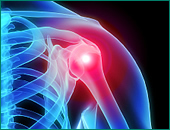
What is Shoulder Impingement? Impingement refers to mechanical compression and/or wear of the rotator cuff tendons. The rotator cuff is actually a series of four muscles connecting the scapula (shoulder blade) to the humeral head (upper part of the shoulder joint.) The rotator cuff is important in maintaining the humeral head within the glenoid (socket)...
Read more »

How Can I Prevent My Shoulder From Dislocating Again?

November 4, 2008
By Paul O'Brian

Patients can often compensate for loose ligaments by increasing the strength and control of the rotator cuff and shoulder blade muscles. These muscle groups help pull the humeral head into the glenoid and will pull more tightly if they are strong. Typical rehabilitation programs start with a short period of immobilization with a sling...
Read more »

The Degenerative Effects of Inactivity

August 28, 2008
By Paul O'Brian

• Cardiovascular changes including elevated heart rate, decreased cardiac output, orthostatic and autonomic dysfunction, venous stasis and thrombosis. • Respiratory changes include reduced lung capacity. • Musculoskeletal problems of reduced strength, endurance, lactose tolerance, risks of contractures and heterotrophic ossification of individuals with CNS or spinal damage. • Metabolic risks including negative nitrogen or calcium imbalances, carbohydrate intolerance and insulin resistance. • Urinary...
Read more »

The Benefits of Therapeutic Exercise

August 8, 2008
By Paul O'Brian

• Increases size and strength in musculotendinous tissue and tensile strength • Improves coordination and timing of muscular groups • Reduces atrophy • Improves reaction, recruitment and endurance • Supervision and instruction by your therapist for safe use and progressions • Instructed techniques which promote accelerated muscle development • Improve cardiovascular fitness • Reduces edema • Improves connective tissue strength and integrity • Promotes circulation to enhance soft tissue healing/metabolism • Increases bone density • Increases endurance,...
Read more »

Functional Stress for Tensile Tissue

July 27, 2008
By Paul O'Brian

BY: Ross Hutchinson, PT, CSCS, Clinic Director When a therapist considers a patient’s rehab program several factors must be addressed. Beyond looking at individual strength levels and activity levels desired we must consider the severity of injury. We specify our programs to appropriately stress the injured tissue. ...
Read more »

CLOSED KINETIC CHAIN EXERCISES

July 3, 2008
By Paul O'Brian

By: Bill Steinberger, MS, PT, CSCS Most functional movements in the lower extremity take place when the foot is on the ground. The hip, knee and ankle joints, when taken together, comprise the lower extremity kinetic chain. When the distal segment is fixed and proximal segments move, the motion is called closed kinetic chain...
Read more »